
The Hidden Biases in Your Hiring Process
Imagine two candidates. Both have five years of experience. Both hold the same qualifications. Both apply for the same role. One gets a callback. One doesn’t. The only difference? Their name.
TALENT ACQUISITIONORGANIZATIONAL PSYCHOLOGYHIRING STRATEGY
Paulo Barrelas
4/4/20269 min read
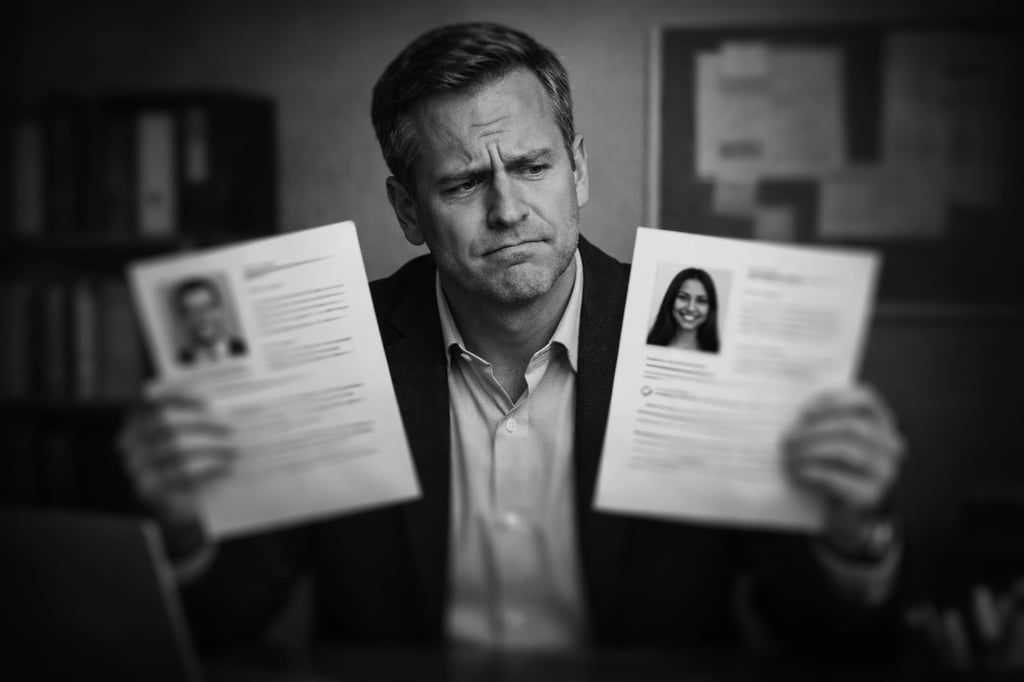
Imagine two candidates. Both have five years of experience. Both hold the same qualifications. Both apply for the same role. One gets a callback. One doesn’t. The only difference? Their name.
This is not a thought experiment. It is one of the most replicated findings in modern labor market research, and it is just the beginning of a long list of ways that hiring decisions go wrong before a single interview ever takes place.
As People Operations professionals, we often like to believe that our hiring processes are meritocratic. We tell ourselves we are looking for the best person for the job. But the research tells a more uncomfortable story: hiring decisions are routinely shaped by factors that have nothing to do with the ability to do the work. And perhaps the most insidious of these is the concept we have come to call “culture fit.”
The Research: What the Studies Actually Show
The evidence on hiring bias is not anecdotal. It is empirical, peer-reviewed, and in some cases, decades old, which makes it all the more alarming that many organizations still have not acted on it.
1. Name Discrimination Is Real and Measurable
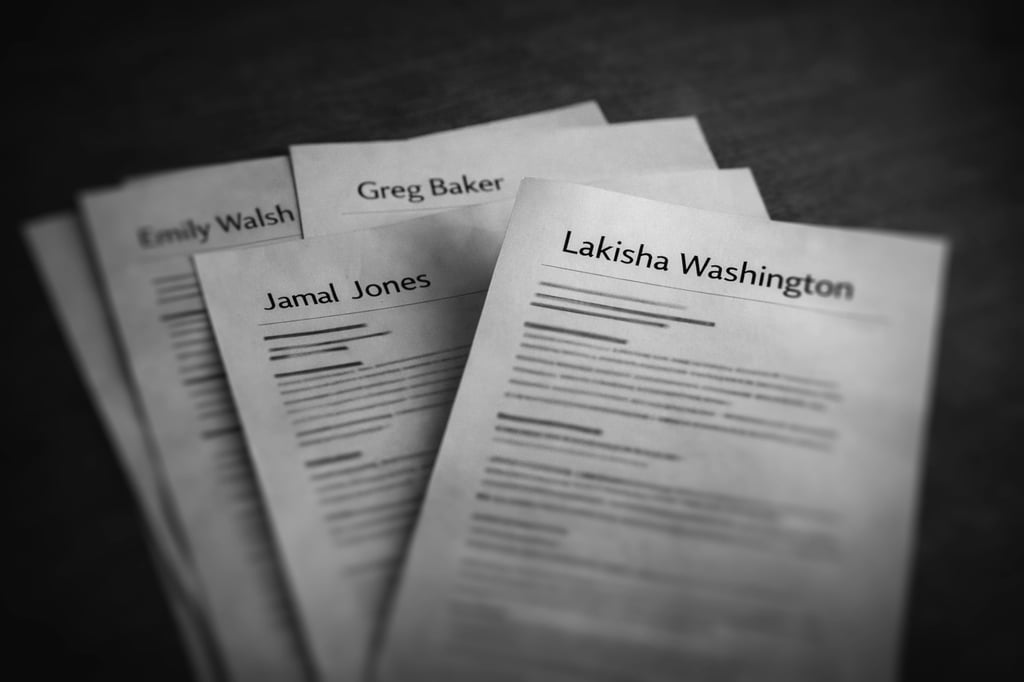
In what has become one of the most cited papers in labor economics, University of Chicago's Marianne Bertrand and MIT's Sendhil Mullainathan conducted a landmark field experiment in which they sent nearly 5,000 identical resumés to over 1,300 job advertisements in Boston and Chicago. The only variable: the name at the top of the page.
Resumés assigned names perceived as white, such as Emily Walsh or Greg Baker, received 50 % more callbacks for interviews than identical resumés assigned names perceived as Black, such as Lakisha Washington or Jamal Jones. To put it another way: a white-sounding name yielded as many additional callbacks as eight extra years of professional experience.
The findings did not vary meaningfully across industries, occupations, or employer size. Companies that explicitly advertised themselves as "Equal Opportunity Employers" discriminated just as much as those that did not.
Perhaps the most striking finding: for white-sounding names, a higher-quality resumé generated 30 % more callbacks than a lower-quality one. For candidates with Black-sounding names, improving their resumes produced no statistically significant increase in callbacks. The bias did not just affect initial access; it erased the reward for effort.
In 2021, a follow-up study by economists Evan Rose, Patrick Kline, and Christopher Walters extended this research to a massive scale, sending over 83,000 fictional applications to more than 100 Fortune 500 companies. Their findings confirmed that racial discrimination in hiring remains systemic, with some companies discriminating significantly more than others, suggesting that this is not just an individual bias problem, but an organizational and structural one.
The implications are stark: if a candidate cannot get a callback for a role they are qualified for simply because their name does not sound "right" to the person screening resumés, then the entire premise of merit-based hiring is compromised at its very first gate.
2. The Introvert Penalty: When Being Focused Becomes a Liability
Beyond race, researchers have begun documenting another form of systemic bias in hiring: a strong and often unexamined preference for extroverted personality traits.
Multiple studies in organizational psychology and recruitment practice have found that recruiters consistently, and often unconsciously, equate social expressiveness with competence, leadership potential, and general desirability as a hire. Candidates who present as quieter, more reserved, or who clearly prefer focused independent work over social interaction are routinely screened out, not because of any deficit in skill or performance potential, but because they fail to perform extroversion in the interview room.
Recruiting practitioners and researchers alike have noted this troubling pattern: hiring managers frequently request candidates who are "outgoing," "personable," and "team-oriented", descriptors that, in practice, are often proxies for extroversion. This has led to a situation where the ability to work well with people in social settings is treated as a universal job requirement, even for roles that demand deep concentration, independent analysis, or technical precision.
The irony is that introversion carries no performance deficit. Research consistently shows that introverts can be highly effective communicators, skilled collaborators, and exceptional leaders, they simply operate differently. Susan Cain's landmark work on introversion, grounded in decades of psychology research, demonstrates that some of the most effective leaders and contributors across industries are introverts. What recruiters often filter out is not low performance potential but a different communication style.
As one recruiting professional put it: the introvert is often the one in the interview who is most keenly aware of the interaction, working hardest to make it successful. The extrovert simply takes social fluency for granted. Penalizing the former for being less effortlessly performative does not surface the best hire — it surfaces the most comfortable one.


3. “Culture Fit” as a Mechanism for Exclusion
Perhaps the most pervasive and least scrutinized source of bias in modern hiring is the concept of "culture fit." On the surface, it sounds like a reasonable criterion: you want someone who will thrive in your organization, align with its values, and work well with the existing team. In practice, research shows that culture fit often serves as a socially acceptable justification for discrimination driven by similarity bias.
A mixed-methods study published in Frontiers in Psychology examining recruitment practices in Germany identified three distinct yet interconnected sources of discrimination in the hiring pipeline. The first is the recruiter's own stereotypical impressions of candidates, often formed within seconds of reviewing a photograph or reading a name. The second is the explicit preferences of hiring managers, who sometimes instruct recruiters to avoid certain types of candidates, instructions that recruiters know are illegal, but often follow anyway. The third, and perhaps most insidious, is what researchers describe as recruiters' assumptions about what hiring managers want, even without being told.
This third mechanism is a meta-cognitive process: recruiters pre-screen candidates based on an imagined version of what the client will find acceptable. If a recruiter believes that a conservative firm in a particular region will not welcome a candidate from a minority background, they may remove that candidate from the shortlist without ever consulting the manager. Discrimination occurs in the gap between actual requirements and assumed preferences.
Broader research supports this pattern. Studies show that those evaluating candidates tend to hire people who are similar to themselves, a phenomenon known as homosocial reproduction. A 2024 analysis in World Englishes found that "culture fit" has been increasingly used as a blanket term to reject candidates who do not conform to dominant norms and biases, regardless of their actual qualifications or performance potential.
As Patty McCord, former Chief Talent Officer at Netflix, famously described it: culture fit often comes down to "hiring people you'd like to have a beer with." This may feel like a reasonable instinct in the moment, but it systematically excludes candidates who don't share the interviewer's social class, cultural background, communication style, or demographic profile — none of which predict job performance.


The Real Cost: What We Lose When We Hire by Comfort
When organizations screen for how fun someone's hobbies seem, whether they'd enjoy having drinks with the team, or whether their personality matches an existing "vibe," they are not selecting for job performance. They are selecting for social similarity. And the cost of that pattern is compounding.
They lose access to talent. Highly capable candidates are filtered out at the resume or first-interview stage because of factors completely unrelated to their ability to do the job.
They reinforce homogeneity. Teams built by similarity bias lack the cognitive diversity that drives genuine innovation, problem-solving, and resilience under pressure.
They undermine organizational trust. Employees from underrepresented groups who observe biased hiring patterns quickly recognize that advancement in such organizations is not purely meritocratic.
They incur financial risk. The average cost-per-hire is estimated at $4,700, with total hiring costs often reaching three to four times the position's annual salary when you include onboarding, lost productivity, and turnover. Biased hiring decisions increase bad-hire rates, compounding this cost.
Research from the National Bureau of Economic Research and elsewhere consistently shows that team and organizational diversity is correlated with improved financial performance, stronger innovation pipelines, and better decision-making. Homogeneous teams perform worse on complex problems precisely because everyone shares the same blind spots.
The problem, in other words, is not a values issue. It is a performance issue. Bias in hiring is not just unfair; it is a quality control failure.
From Culture Fit to Culture Add: A Necessary Reframe
The concept of "culture add" has emerged as a more considered alternative to culture fit. Rather than asking "will this person conform to how we already operate?", culture add asks: "what does this person bring that makes us better?”
Recent research from Berkeley Haas and Stanford suggests this is more than just a terminology shift. Studies show a distinction between values alignment, which is important and worth assessing, and social similarity, where bias most readily enters. Candidates can hold the same core values as your organization (integrity, accountability, collaboration) while expressing them through entirely different cultural styles, communication approaches, and lived experiences. It is the latter variation that adds richness to a team, not a deficit.
Culture add does not mean abandoning standards. It means clarifying what those standards actually are, ensuring they are genuinely connected to the work, and consistently evaluating candidates against them. It means distinguishing between the core competencies and values that actually drive performance in a role, and the superficial social preferences that feel important but measure nothing.
What Better Hiring Looks Like: Practical Interventions
The good news is that the same body of research that documents hiring bias also points clearly toward evidence-based interventions that work. None of them requires extraordinary resources. They require intentionality and process discipline.
Structured Interviews with Standardized Questions
Unstructured interviews — the informal conversations that dominate most hiring processes — are among the most bias-prone evaluation tools available. They are highly susceptible to affinity bias, halo effects, and confirmation bias because they allow interviewers to steer conversations in directions that confirm their initial impressions.
Structured interviews, by contrast, require all candidates to be asked the same predetermined questions, evaluated against the same competency-anchored rubric, and scored independently before group discussion. Research consistently shows that structured interviews reduce the influence of irrelevant candidate characteristics and significantly improve the predictive validity of the hiring process. Every candidate is measured by the same criteria explicitly tied to job requirements.
Blind Resumé Screening
Given the robust evidence on name-based discrimination, removing personally identifying information from resumés before they reach screeners is one of the most straightforward structural interventions available. This includes names, photos, graduation dates that reveal age, and addresses that can encode socioeconomic status or neighborhood.
Blind hiring techniques have been shown to produce more diverse interview-stage candidate pools without lowering qualification standards. The New York Philharmonic's adoption of blind auditions, for example, increased female representation from 6% to nearly 50%. Organizations that implement blind resumé review consistently report improvements in demographic diversity at the shortlisting stage.
Blind screening is not a complete solution on its own; bias can re-enter at the interview stage, but as part of a layered approach, it addresses the most direct and most frequently unconsciously processed bias signal.
Skills-Based Assessments
Rather than inferring capability from credentials, institutions, or conversational impressions, skills-based assessments evaluate what candidates can actually do. This can take many forms: case studies, work samples, structured exercises, or applied tests directly relevant to the role.
Research shows that pre-employment skills assessments outperform both resumés and unstructured interviews as predictors of job performance. They also tend to level the playing field for candidates who have followed non-traditional paths, such as career changers, self-taught professionals, and those from less prestigious institutions, but who are fully capable of doing excellent work.


The Standard We Should Be Holding Ourselves To
The best hire is not the one who feels most familiar. It is not the one you would most enjoy socializing with. It is not the one whose name sits most comfortably on the page. The best hire is the one who can solve your problems, elevate your team, and contribute in ways that your current team cannot.
Finding that person requires a process that is honest about its own limitations. It requires an acknowledgment that every screener carries biases, not because they are bad people, but because all humans do. And it requires deliberately constructing structural safeguards that reduce the influence of those biases on outcomes.
The research is clear. The tools are available. What remains is the organizational will to apply them consistently and with care.
As People Operations practitioners, this is precisely our brief: not to make hiring feel comfortable, but to make it accurate. Not to reinforce the cultures we already have, but to build the ones we actually need.
Key Sources & Further Reading
Bertrand, M. & Mullainathan, S. (2004). "Are Emily and Greg More Employable than Lakisha and Jamal? A Field Experiment on Labor Market Discrimination." American Economic Review, 94(4), 991–1013.
Kline, P., Rose, E.K., & Walters, C.R. (2022). "Systemic Discrimination Among Large U.S. Employers.” National Bureau of Economic Research.
Bonelli, H. (2024). "The Myth of Cultural Fit in Recruitment Job Interviews.” World Englishes. Wiley Online Library.
Fronts in Psychology (2021). "The Discriminatory Potential of Modern Recruitment Trends — A Mixed-Method Study from Germany." PMC / Frontiers in Psychology.
Malhotra, R. (2019). "How to Reduce Personal Bias When Hiring." Harvard Business Review
Bortz, D. (2018). "Can Blind Hiring Improve Workplace Diversity?" Society for Human Resource Management.
Chatman, J. & Srivastava, S. (2023). "Culture Fit May Not Be What Most Hiring Managers Think It Is." UC Berkeley Haas School of Business.
McCord, P. (2018). "How to Hire." Harvard Business Review.
Contact
Reach out to start building your team culture.
About
Stay updated
© 2025. All rights reserved.